

Daily Maintenance Guide for Fuel-Powered Karts (Part 2)
Hello everyone, I’m Teacher Xu from KUPAO Operations. In the previous installment, we talked about the core maintenance of kart engines. Today, we continue with another important aspect of daily care for fuel-powered karts – inspection of the chassis, steering, and safety systems. These items directly affect driving safety and on-track performance, so they must be checked before every session.
1. Four-Point Harness – The First Line of Defense for Life
The four-point harness is the most important passive safety device on a kart. Inspection consists of three steps:
-
Webbing inspection: Pull out the two shoulder straps and two lap belts, and check for fraying, cuts, abrasion, or broken threads. Pay special attention to areas that contact the buckle and guide loops. If any cut deeper than 1 cm is found, replace the entire webbing immediately.
-
Buckle lock test: Insert the four tongues into the buckle one by one. After hearing a clear "click", pull the webbing firmly to confirm the buckle will not release accidentally. The release pull tab should return smoothly.
-
Anchor point check: The bolts that secure the harness to the frame must be spot-checked with a torque wrench. A loose bolt can cause the entire harness to shift during a crash, losing its protective function.
Daily usage reminder: Never spray any lubricant or oil on the harness, as this can cause the locking mechanism to slip.
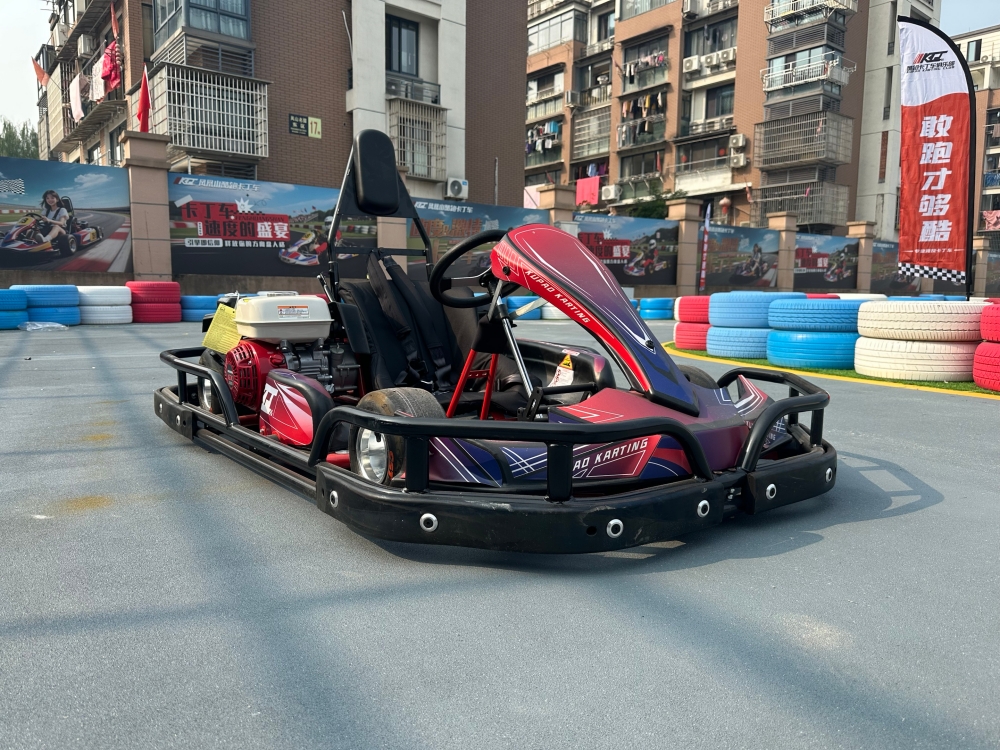
2. Steering Wheel & Tie Rods – Core of Steering Precision
Center the kart's steering wheel. Get off and observe the direction of both front wheels. Under normal conditions, the wheels should point roughly straight ahead. If the steering wheel is centered but the wheels are noticeably turned to one side (e.g., pointing left), the toe angle or tie rod length needs adjustment.
Adjustment method: Locate the lock nuts at both ends of the steering tie rods. Loosen the nuts on both sides with an open-end wrench. Use pliers or a dedicated tool to rotate the rod body – shortening the rod pulls that wheel inward, lengthening it pushes the wheel outward. After fine-tuning, tighten the lock nuts and verify again that the wheels are straight when the steering wheel is centered. Note: The adjustment amount on the left and right tie rods should be as symmetrical as possible; otherwise, steering angles will differ between left and right turns.
In daily inspections, if the steering wheel centered does not match the wheel direction, or the steering wheel is crooked when the kart runs straight, this adjustment is needed.
3. Throttle & Brake Systems – Smoothness of Power and Braking
-
Throttle check: Start the engine and gently press the throttle pedal while stationary. Observe that the throttle valve opens synchronously – engine speed should rise smoothly without sticking or surging. Quickly release the pedal; the throttle should snap back to idle. If it returns slowly or not at all, check whether the throttle cable is rusted or binding.
-
Brake check: Press the brake pedal while stationary – the feel should be firm, not spongy. Then drive at low speed (5–10 km/h) and stomp the brake – the kart should stop decisively, with no obvious dragging or veering. If the stopping distance is significantly longer, or the pedal goes to the floor without stopping, the brake system needs bleeding or new brake pads.
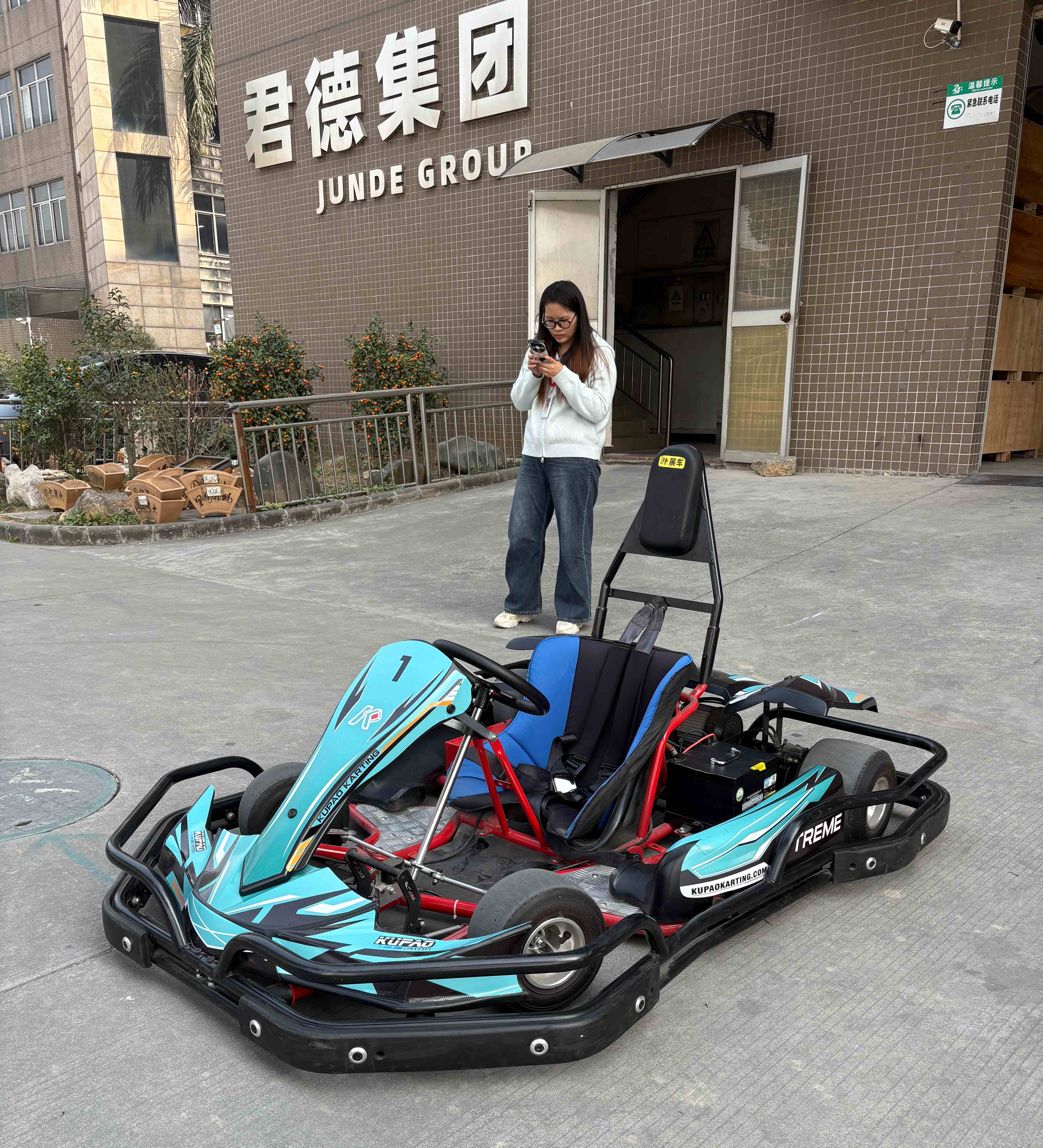
4. Bodywork & Surrounding Bolts – Small Details Prevent Big Trouble
The kart bodywork is not just for looks; it also provides impact protection and shields against mud and debris. Wipe the bodywork with a damp cloth, paying special attention to cleaning oil and grime that accumulate around the engine cooling vents and underneath. A clean body also makes it easier to spot cracks or looseness.
Full-vehicle bolt inspection: Use a socket or hex key to check the following bolts in order – front and rear bumper mounting bolts, side pod bolts, engine mount bolts, seat mounting bolts, and steering knuckle nuts. A single loose bumper bolt could cause the side pod to fall off and get entangled in the chain during a collision.
Final Thoughts
Many sudden failures on the track – pulling to one side, brake failure, a stuck harness – actually stem from neglected daily checks. Remember today's mantra: Harness tight, steering straight, throttle and brake smooth, all bolts secure. Spending five minutes on these checks ensures driver safety and vehicle reliability.


